
Intersections
You wish to go straight ahead at this roundabout. Which statement is true?
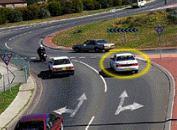
When you wish to drive straight ahead at a roundabout you may enter from either the left or right lane. As you continue around you should:
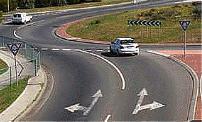
If turning at an intersection are you required to give way to pedestrians?
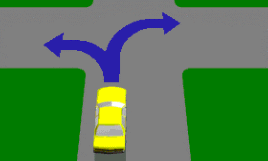
You wish to make a right-hand turn from a ONE WAY STREET with no arrows marked on the roadway. You should position your vehicle:
As you approach an intersection, you should check for traffic on your left and right:
In this diagram both vehicles O and P must pass through GIVE WAY signs before entering the intersection. Which vehicle goes first?
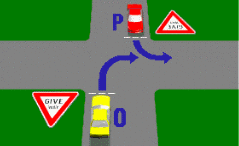
You wish to go straight ahead on this roundabout with two lanes. Which lane may you use?
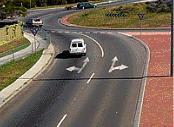
If you enter an intersection that is under the control of a traffic controller:
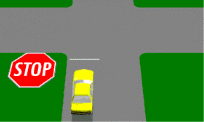
You drive up to an intersection with a stop sign. There is no painted stop line. Where should you stop?
In this diagram both vehicles O and P must pass through GIVE WAY signs before entering the intersection. Which vehicle goes first?
When you wish to turn left at a roundabout you indicate:
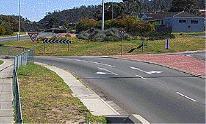
Right-turns must be made from which lanes when travelling on a laned roadway?
If a STOP or GIVE WAY sign has been knocked down, for example, as the result of an accident, does the line marked across the road have any meaning?
When you wish to drive straight ahead at a roundabout you may enter from either the left or right lane. As you continue around you should:
To turn back into the same road from which you joined this roundabout you must:
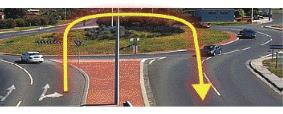
You are in the car approaching the intersection shown, you should:
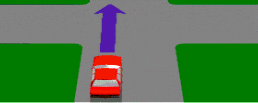
A GIVE WAY sign at an intersection means that you must:
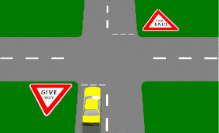
You wish to turn left at this roundabout. Which lane may you use?
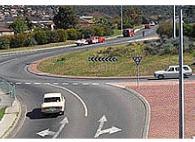
There are no traffic signs or signals at an intersection. If you intend to drive through the intersection, you must give way to:
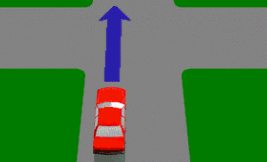
There are no traffic signs or signals at an intersection. If you intend to drive through the intersection, you must give way to:
When police officers are at intersections giving directions you must:
Right-turns must be made from which lanes when travelling on a laned roadway?
You wish to make a right-hand turn from a ONE WAY STREET with no arrows marked on the roadway. You should position your vehicle:
Which vehicle in the diagram must give way?
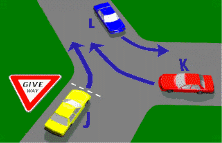
When making a right-hand turn at the intersection shown, you must give way to:
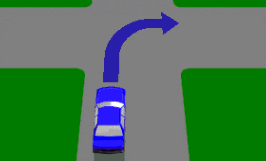
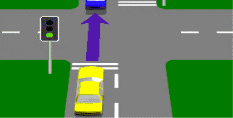
You approach an intersection in busy traffic and want to go straight ahead. The traffic lights turn green. When are you permitted to enter the intersection?
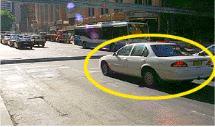
As you drive into an intersection, the lights turn to yellow. You should:
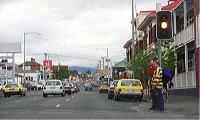
You want to turn left at this roundabout. Which lane must you use?
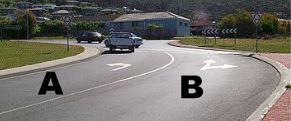
You are in the right hand lane and are planning to go straight ahead through this roundabout. When should you signal left to exit the roundabout?
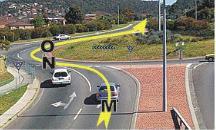
If both vehicles P and O in the diagram are turning right, which vehicle is in the best position to turn left into the street marked 'X'?
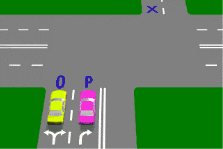
At the T-intersection shown in the diagram which vehicle should give way?
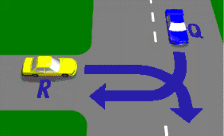
Even if the signal at a railway level crossing does not indicate that a train is coming, you should:
At the T-intersection shown in the diagram which vehicle should give way?
If turning at an intersection are you required to give way to pedestrians?
When police officers are at intersections giving directions you must:
If both vehicles P and O in the diagram are turning right, which vehicle is in the best position to turn left into the street marked 'X'?
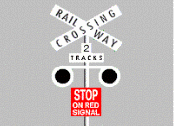
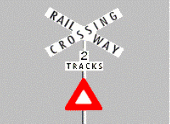
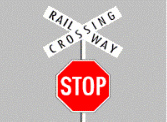
When approaching a railway level crossing displaying this sign, you must:
As you drive into an intersection, the lights turn to yellow. You should:
Which statement is correct?
When making a right-hand turn at the intersection shown, you must give way to:
You drive up to an intersection with a stop sign. There is no painted stop line. Where should you stop?
When you come to an intersection and the road beyond is choked with vehicles going in the same direction, what should you do?
When you wish to turn left at a roundabout you indicate:
If turning right at a T-intersection (as shown) must you give way to vehicles approaching from both the left and right?
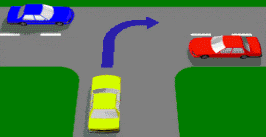
The red car wants to turn right and exit the roundabout in the street indicated by an arrow. Is the car positioned in the correct lane to do this?
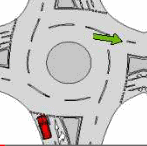
If you enter an intersection that is under the control of a traffic controller:
To turn back into the same road from which you joined this roundabout you must:
When there are no arrows marked on the road, left turns must be made from:
If the boom gates are down and the signals are flashing, at a railway level crossing, you may begin to cross:
When you come to an intersection and the road beyond is choked with vehicles going in the same direction, what should you do?
You wish to turn left at this roundabout. Which lane may you use?
You are at an intersection and see a pedestrian crossing the road into which you are turning. You must:
You approach an intersection in busy traffic and want to go straight ahead. The traffic lights turn green. When are you permitted to enter the intersection?
You are driving the car in the diagram. You must stop:
The red car wants to turn right and exit the roundabout in the street indicated by an arrow. Is the car positioned in the correct lane to do this?
You wish to go straight ahead at this roundabout. Which statement is true?
As you approach an intersection, you should check for traffic on your left and right:
When turning left at a roundabout you should enter and leave the roundabout:
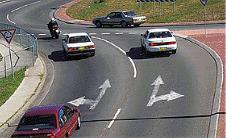
Which vehicle in the diagram must give way?
You want to make a left turn. You must use your left-hand indicator
Vehicle O is at a STOP sign
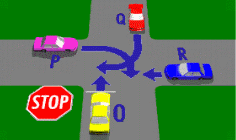
Which statement is correct?
You are in the car approaching the intersection shown, you should:
When approaching a railway level crossing displaying this sign, you must:
When there are no arrows marked on the road, left turns must be made from:
You wish to go straight ahead on this roundabout with two lanes. Which lane may you use?
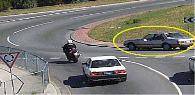
The motorcyclist wants to travel straight ahead through this roundabout. The rider should watch out for the marked car because the car:
Vehicle O is at a STOP sign
What should you do on approaching a railway level crossing displaying a STOP sign?
If a STOP or GIVE WAY sign has been knocked down, for example, as the result of an accident, does the line marked across the road have any meaning?
When turning left at a roundabout you should enter and leave the roundabout:
You want to turn left at this roundabout. Which lane must you use?
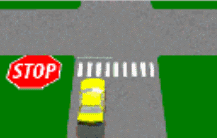
The diagram shows a marked pedestrian crossing at an intersection. There is also a STOP sign at the intersection. You have already stopped for a pedestrian. Must you stop again at the STOP line?
You are at an intersection and see a pedestrian crossing the road into which you are turning. You must:
You are in the right hand lane and are planning to go straight ahead through this roundabout. When should you signal left to exit the roundabout?
You are driving the car in the diagram. You must stop:
The motorcyclist wants to travel straight ahead through this roundabout. The rider should watch out for the marked car because the car:
The diagram shows a marked pedestrian crossing at an intersection. There is also a STOP sign at the intersection. You have already stopped for a pedestrian. Must you stop again at the STOP line?
Even if the signal at a railway level crossing does not indicate that a train is coming, you should:
You want to make a left turn. You must use your left-hand indicator
What should you do on approaching a railway level crossing displaying a STOP sign?
If the boom gates are down and the signals are flashing, at a railway level crossing, you may begin to cross:
If turning right at a T-intersection (as shown) must you give way to vehicles approaching from both the left and right?
A GIVE WAY sign at an intersection means that you must:
Not enough to pass :-(
You have answered 0 correct out of 84 question(s).
What's Next?
Review your answers
See which answers you chose and what the correct answers are.
Study Guide
Review all the correct answers.
Question: {counter}
{question}
- {options}