The NSW hazard perception test, in plain terms
The NSW hazard perception test puts 15 short video clips in front of you and asks you to respond at the moment it is safe to act. Transport for NSW runs it and scores your timing against the response a safe driver would make. The fee is $58 each attempt, effective 1 July 2026, and you may sit the test as many times as you need, paying the fee for every sitting. Transport for NSW sets the pass rule, so practise until your clip runs come back early and steady rather than aiming at a figure. You cannot sit your practical driving test until you have passed this one. If you are 25 or over you can book it when you feel ready; under 25 you must have held your learner licence for a minimum period first, and Transport for NSW sets that period. Both conditions sit on the Transport for NSW hazard perception test page, which is worth reading the week before you book. The clips here are practice scenes built to train your scanning and your timing. They are not Transport for NSW's own test footage, so treat them as rehearsal rather than a preview of what you will be scored on.
Your 15 months after a pass
A pass does not sit on your licence forever. Once you have passed, you have 15 months to pass the driving test, and if that window closes you sit the hazard perception test again. So the order you book things in matters. If your supervised driving hours are nowhere near done, there is little gain in sitting the clips test early, because the clock starts the day you pass it. The comfortable plan is to sit it once your logbook is close to finished and a driving test date is realistic, then book the drive while the window is still wide open. Keep a note of the date you passed and diary it with two months to spare, so a cancelled driving test or a long wait for a slot does not quietly eat the window. If it does lapse, the fee is payable again for a second sitting, which is the cheapest mistake on the whole licence path to avoid. Unlimited attempts also mean a failed sitting is not a setback you have to explain to anyone. You pay, you book again, and the clips you ran here are still in your eye.
Reading a hazard before it arrives
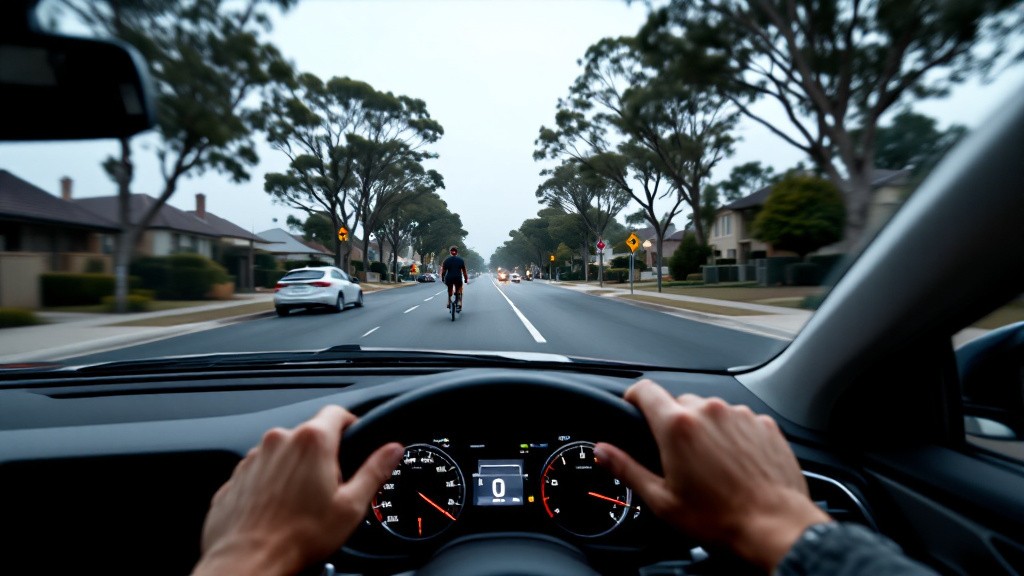
The clips test whether you can see a hazard while it is still developing, rather than react once it has already arrived. You watch an ordinary road scene unfold from the driver's seat and respond at the moment a safe driver would start to act. That is a judgement, not a reflex. A car edging out of a side street, a pedestrian turning towards a crossing, brake lights two cars ahead: each one gives you a second or two of warning if your eyes are already moving ahead of the bonnet. Fast fingers do not help when the scan starts late. There are three ways a response goes wrong, and it is worth knowing which one is yours. Practise by saying out loud what you expect to happen next in each scene. If the words come before the hazard does, your scan is early enough. If you are naming the hazard only as it unfolds, keep running the same scene types until the reading comes first and the response follows it.
Too early
You respond before the hazard has genuinely started to develop. Nothing on the road yet justifies the action, so the timing counts against you.
Too late
You wait until the hazard is already on top of you. A safe driver would have eased off or moved earlier, so a late response misses the window.
Holding back
Sometimes the safe choice is to do nothing and keep your line. Responding when no action was needed is still a wrong call.
The clip library on this site
The clip library lives at Open the clip library and the free clips are open to anyone. You run a scene, respond when acting becomes safe, and build the early scan the real test rewards. Three steps, in order. Start with the free clips and run a handful cold, so you can see whether you tend to go early, go late, or respond to scenes that never develop. Then step up to premium practice, sold as part of the course at what the premium course includes: it adds more scenes and more replays of the same judgement, so a call you misread once can be run again until the timing settles. If you already hold the course, sign in at sign in to your account and pick up where you left off. None of it has a score to beat. Judge yourself on how early and how steadily you respond, and on whether the hold-back scenes are starting to look obvious rather than tempting.
Free clips, no sign-up
Open the clip library and run as many free scenes as you like, practising the tap-when-safe judgement the NSW test asks for.
Premium practice
The premium clips, sold as part of the course, add more scenes and let you replay the same judgement call until your timing settles. See what the premium course includes for what the course includes.
Already a member
If you already hold the course, sign in at sign in to your account to pick up where you left off and keep running the premium scenes.
Where the clips test sits before your driving test
Transport for NSW publishes the order of the tests on the way to a full licence, and the hazard perception test is the last gate before the drive. First comes the learner knowledge test, which you sit for your learner licence. Then come your supervised driving hours, logged over months rather than weeks. The hazard perception test follows, and it checks a different skill from the written test: judgement of hazards in motion rather than recall of road rules. Only once it is passed can you book the practical driving test. If you are still at the earlier stage, work through the learner knowledge test first, then practise the written test at practice test 1 so the rules are second nature before you add clip timing on top. The two kinds of preparation do not compete for your attention, but there is little point drilling clips while the road rules are still shaky. Start at the learner knowledge test if the whole sequence is new to you.
Booking through Service NSW and on the day
You book the NSW hazard perception test through Service NSW. Check the current conditions on the Transport for NSW hazard perception test page before you pay, because eligibility and the identification you need are the authority's to set and do change. On the day, bring the identification listed for the booking and get there with time to spare. Rushing in works against the calm, early scan the clips reward, and a document problem can cost you the slot. The fee is payable for every sitting, so the free runs here are the rehearsal that keeps repeat fees down. Rescheduling and cancelling are handled where you made the booking, under the notice rules that apply at the time. If you do have to move a date, keep running clips in the gap so the rebooked sitting still finds your eye warm.
A seven-day clip plan
Seven short sessions on the free clips at Open the clip library, with no score to chase. The aim is a calmer, earlier read of each scene by the end of the week. Keep each session short, around fifteen or twenty minutes. The week works because it is spread out: a scanning habit forms across several short runs far better than it does in one long evening, and the hold-back scenes need a rested head rather than a determined one. If you miss a day, carry on from where you stopped instead of doubling up to catch the plan. Then book your sitting for the day after a light day, not the day after your heaviest one.
- 1
Day 1: find your tell
Run a set of free clips at Open the clip library with no preparation and notice which way you lean: early, late, or responding when the right answer was to hold.
- 2
Days 2 to 4: the same scene, again
Run the same scene types at Open the clip library over and over until the early scan arrives on its own instead of being summoned.
- 3
Day 5: the scenes that need nothing
Work the clips where the safe choice is to do nothing, so you stop responding to hazards that never develop.
- 4
Day 6: one run, start to finish
Do a complete run at Open the clip library without stopping, so the continuous feel of a real sitting is familiar.
- 5
Day 7: a light run, then stop
One short, calm run at Open the clip library and then leave it alone, so you arrive warm rather than drained.
Official sources
The rules on this page follow the official requirements published by Transport for NSW hazard perception test page; Driver and rider licence fees; Service NSW. Always confirm current rules and fees with the authority before you book.