You passed — what actually changes today
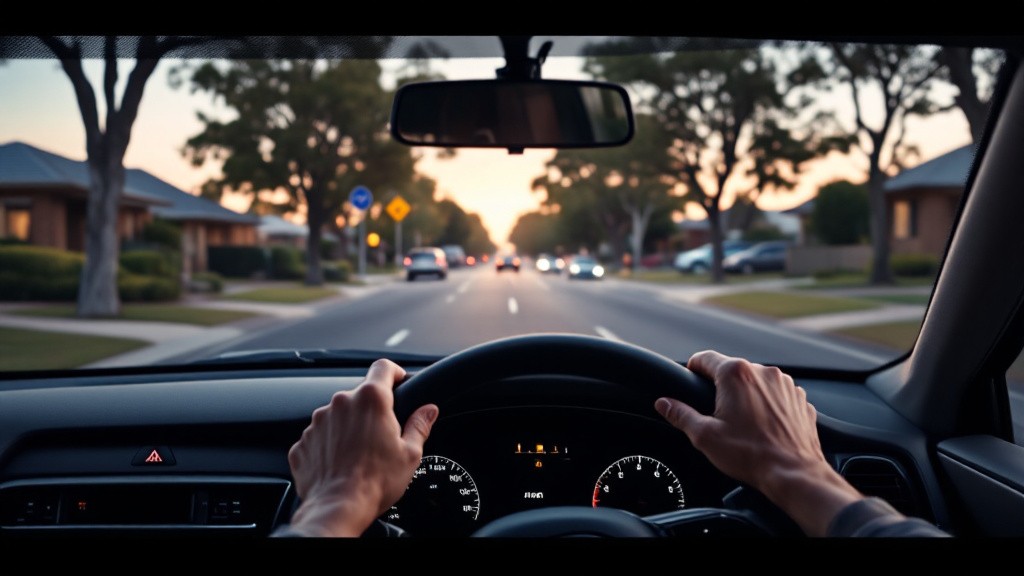
Passing your driving test moves you onto a provisional (P-plate) stage, not a full licence. That stage comes with its own conditions — plate display, alcohol limits, speed and passenger rules, and phone use — and those conditions are set and published by the authority in the state or territory where you drive. They are not the same everywhere, so read your own authority's provisional page before your first solo drive: Transport for NSW, VicRoads in Victoria, TMR in Queensland, the South Australian Department for Infrastructure and Transport, the WA Department of Transport, or the MVR in the Northern Territory. Each publishes the exact rules that apply to you. One nice thing to do today before all the admin: tell the people who taught you — the parent, carer or instructor who sat beside you for all those supervised hours — that you passed.
Buying your first car
Check the car's history before you hand over any money. A used-car history check tells you whether the vehicle has been written off, still has finance owing against it, or has been reported stolen — all things that are invisible on a test drive. Confirm the registration is current and transferable, and find out whether your state requires a roadworthiness or safety certificate before the sale completes — that rule is set by your transport authority, so check their own page for what applies where you live. Book an independent mechanical inspection by a qualified mechanic rather than trusting a seller's word on condition. Then take a proper test drive on the kind of roads you will actually use — if you commute on a highway, drive it on a highway; if you live on tight suburban streets, park it on one. Listen for noises under braking, check the steering pulls straight, and make sure every warning light goes out after start-up. A first car does not need to be new or fast — it needs to be sound, honest, and the right size for a new driver to place confidently on the road.
- 1
Run a used-car history check
Reveals written-off status, finance owing, or a stolen record.
- 2
Confirm registration
Current, and legally transferable to you.
- 3
Check your state's roadworthiness rule
The authority sets whether a safety certificate is required before sale.
- 4
Get a mechanical inspection
An independent qualified mechanic, not the seller's say-so.
- 5
Test drive on real roads
The same road types you'll actually drive every day.
Insurance before the first solo drive
Compulsory third party (CTP) insurance is a legal requirement before you can drive, and it is tied to your registration — your transport authority sets how it is arranged in your state, so check their own page for how it works where you live. CTP covers injury you cause to other people; it does not cover damage to cars or property, which is a common and costly surprise for new drivers. The optional covers, in rising order of protection, are: third-party property (damage you cause to someone else's car or property), third-party fire and theft (that plus your own car being stolen or burnt), and comprehensive (that plus damage to your own car in an at-fault accident). Be ready for the cost: a newly licensed driver's premium is the highest it will ever be, because insurers price on crash risk and new drivers statistically have the least experience behind the wheel. It comes down over time as you build a clean record. Decide what you can genuinely afford to repair out of your own pocket if the worst happens — that honest answer usually points to the right level of cover.
Driving alone for the first time
Your first solo drive is a real step up from supervised driving, because there is no one beside you to catch a missed exit or an unseen hazard. Plan the route before you leave and, if you can, drive it once in daylight with your supervisor so the turns and lane changes are already familiar. Know which lane you need well before the exit — merging late is where new drivers panic. Keep the following gap you were taught in your lessons; it is the single easiest safety margin to hold and the first one people drop once they are alone. Treat fatigue as a genuine hazard, not a weakness — a tired new driver on an unfamiliar road is a real risk, so don't make your first solo trip a long one at the end of a busy day. Start with short, known journeys — the shops, a friend's place, the route to work — and build up to busier roads and highways as your confidence grows. Every uneventful drive is practice that makes the next one calmer.
What to carry
Carry a few things from day one so a small problem never becomes a stranded one.
Your licence
You must carry it while driving — a provisional driver can be asked to produce it.
Insurance & rego papers
Kept where you can find them fast after a bump or a roadside check.
A basic first-aid kit
A minor injury on a quiet road is far easier to handle with one.
A checked spare tyre
Actually inflated and usable — a flat spare helps no one.
Water
A breakdown in the Australian heat is safer with water on board.
A phone mount
Navigation goes in a cradle, never in your hand — that rule is strict for P-platers.
Your first road trip
An Australian licence is recognised in every state and territory, so you can drive interstate on your new provisional licence. The catch is that the road rules you are driving under are the ones of the state you are actually in — and each authority publishes its own. Provisional conditions can differ across borders too, so before an interstate trip read the rules of the state you are heading into: Transport for NSW, VicRoads, TMR in Queensland, the South Australian Department for Infrastructure and Transport, the WA Department of Transport, or the Northern Territory's MVR. Plan for speed and fatigue: Australian distances are long, so build in regular rest breaks and don't try to drive through tiredness. In remote areas, watch your fuel range — fill up well before empty, because the next station can be a long way off. The place new drivers most often get caught is unfamiliar rural roads: higher speeds, wildlife, unsealed shoulders and overtaking lanes that behave differently from the city roads you learned on. Drive those sections slower than you think you need to until they feel familiar.
Not passed yet? Where to practise
If you landed here before your test, the free, no-sign-up practice sets on this site are the place to start — work through the learner knowledge questions until your mock results come back clean, then come back to this page the day you pass. Already licensed and moving up to a motorbike or a truck? Each of those is a separate knowledge test with its own study, and the hazard perception clips are worth working through too. This page is general information only; your transport authority's own page governs the rules that apply to you.
Official sources
The rules on this page follow the official requirements published by Transport for NSW; VicRoads; Transport and Main Roads (Queensland); Department for Infrastructure and Transport (South Australia); Department of Transport (Western Australia); Motor Vehicle Registry (Northern Territory). Always confirm current rules and fees with the authority before you book.